
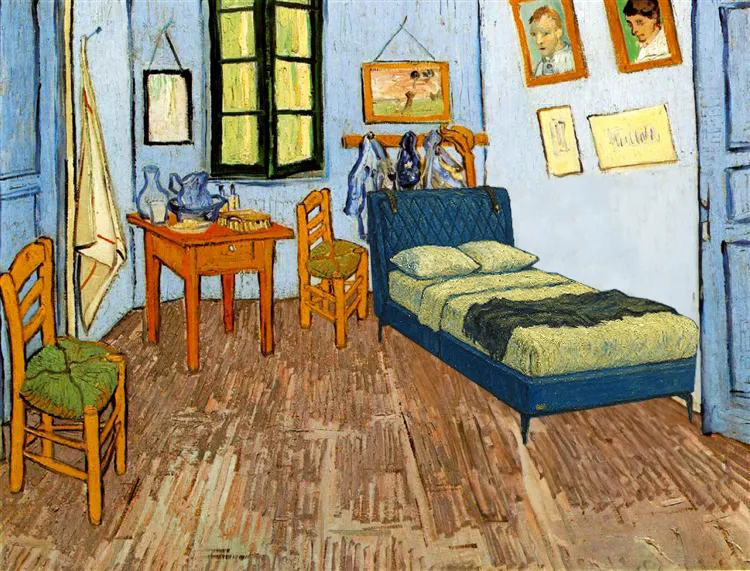
For World Art Day, we decided to imagine the impossible — what if the FRANKOF brand had existed during the time of the great Vincent van Gogh?
Let’s dive into this imaginary story and see what FRANKOF furniture would have looked like back then.
FRANKOF in the 19th century would be a synthesis of functionality and artistic expression. The forms would be simple, almost naive, with a slight asymmetry emphasizing the “humanity” of each piece. The fabrics would have textures reminiscent of Van Gogh’s own brushstrokes.
In those times, FRANKOF would have used materials that were close to the earth — natural and warm.
Wood: Solid oak, ash, or chestnut — local species with character that only add charm over time. They wouldn’t be polished to a mirror shine but left slightly rough — so fingers could “read” the structure of the wood.
Fabrics: Natural linen, coarse cotton twill, wool. Perhaps with hand embroidery or woven patterns.
If FRANKOF had existed in Van Gogh’s time, he likely wouldn’t have been able to pass by this furniture. Imagine:
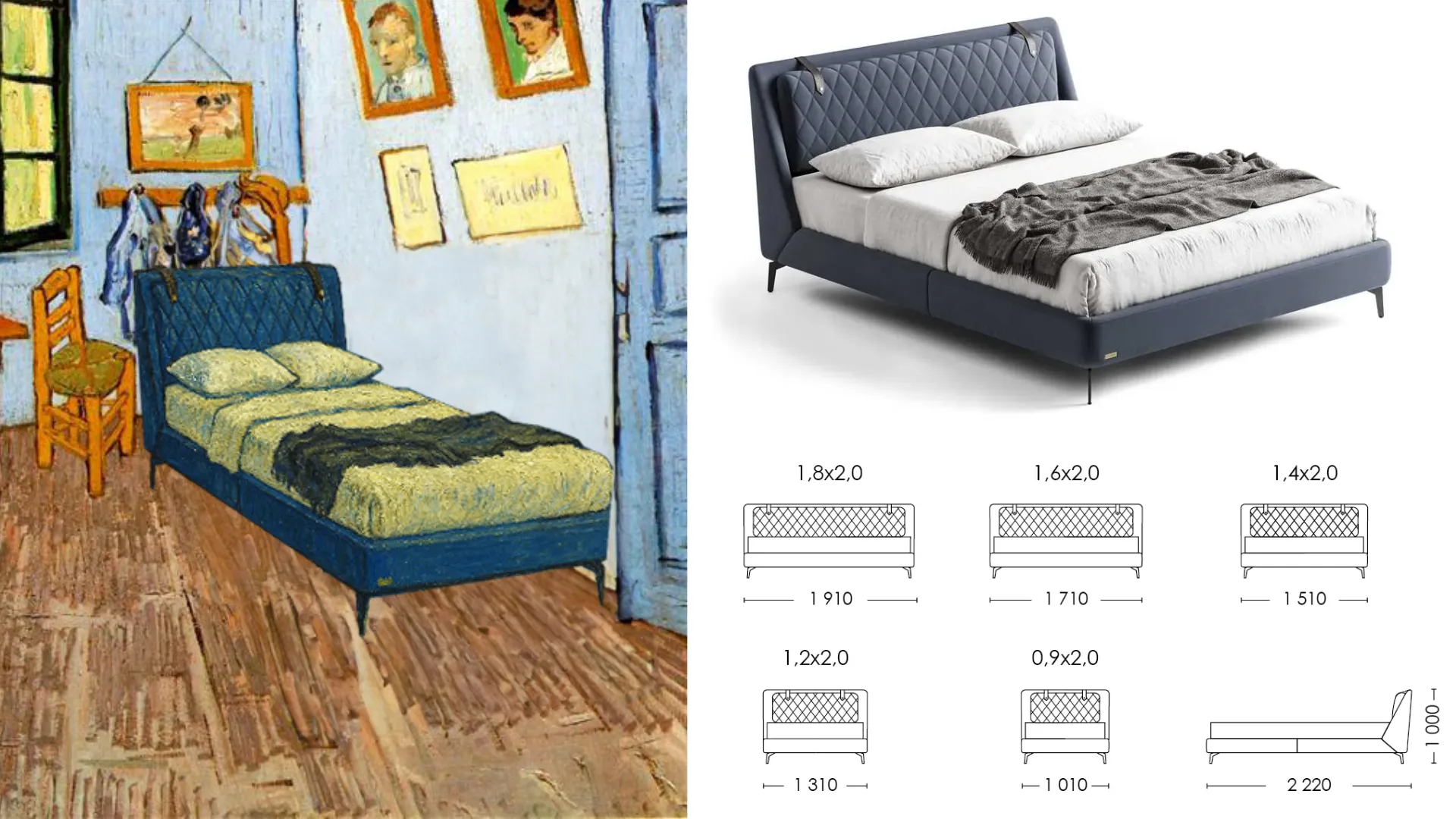
In the painting “Bedroom in Arles,” the “Wels” bed would be depicted in a deep blue color, like the night sky in “The Starry Night.”
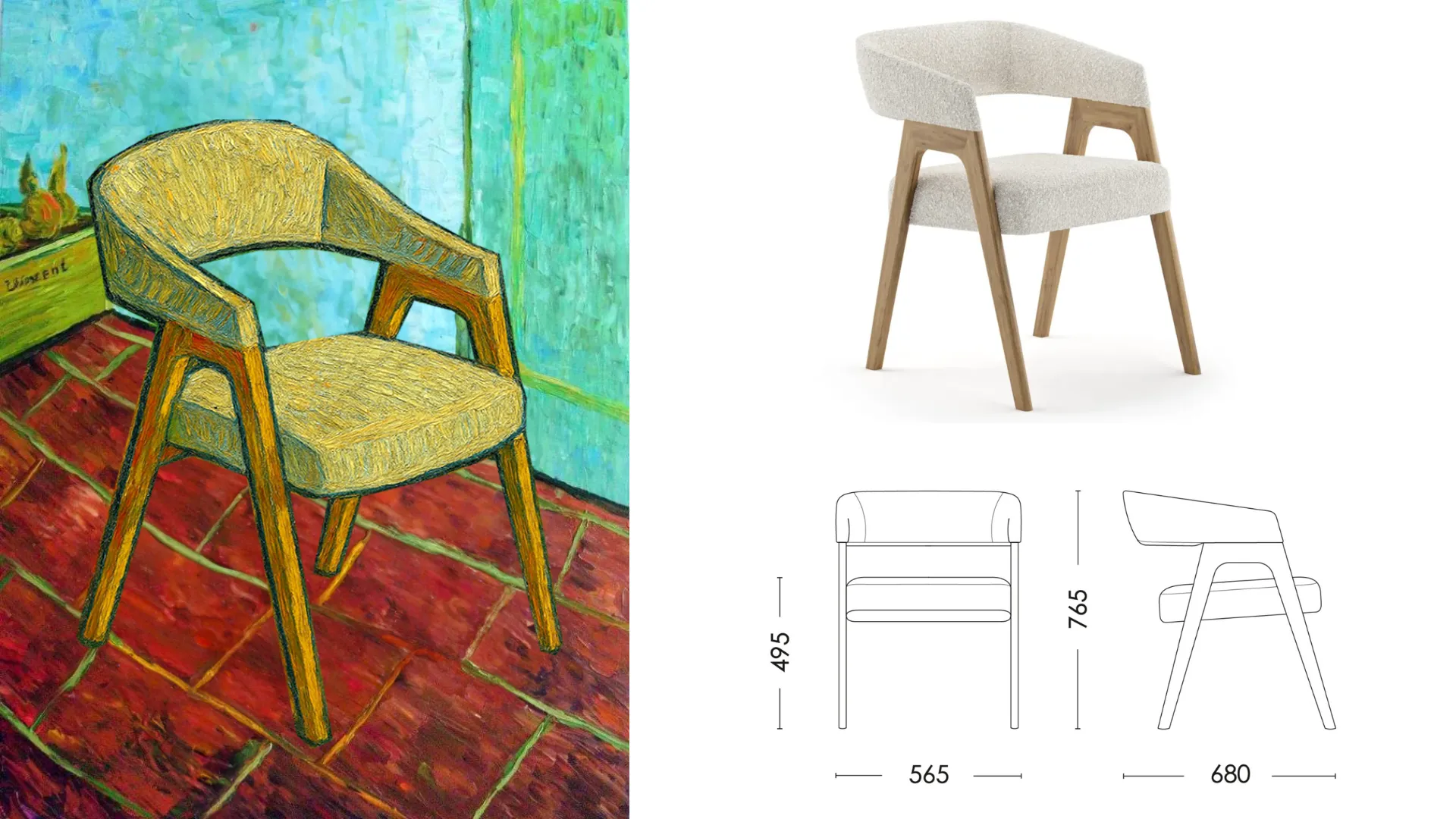
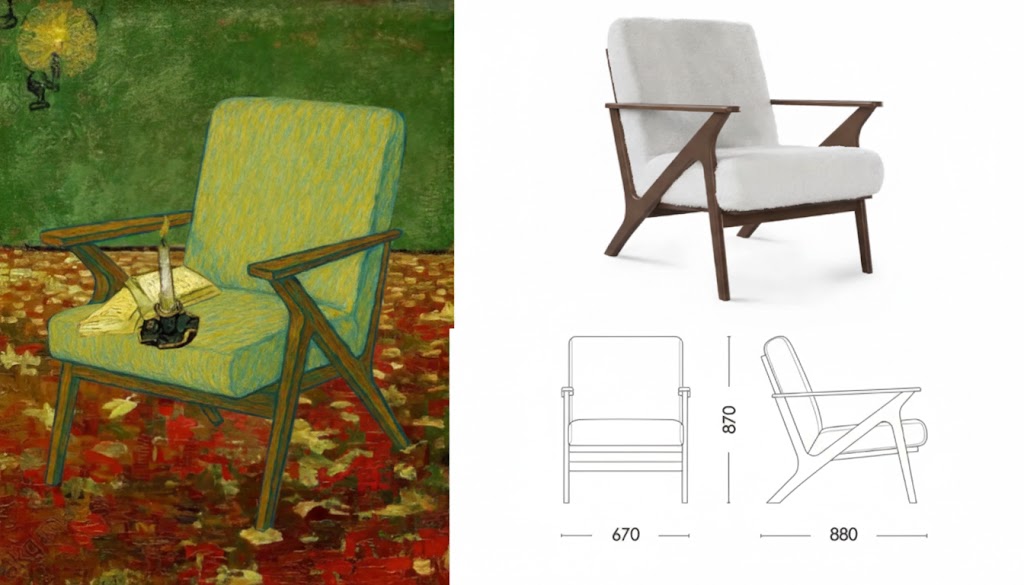
“Gauguin’s Chair” would most likely have captured the modern “Fort” armchair, and “Vincent’s Chair with a Pipe” would certainly have been the “Lars” chair, upholstered in linen with a shade of sunflower yellow — the color that became the painter’s symbol.
This fantasy is not just a play of imagination. It is our tribute to art as a source of inspiration, style, and deep human experience. After all, furniture is also art when it is created with a soul.